
Tailored Training for Young & Green Horses
Thoughtful foundations for horses of every age and background
Green does not necessarily mean young.
A green horse is simply a horse whose education is still developing. That may be a young horse continuing their education after a good start under saddle, an older horse with limited experience, a broodmare starting a new chapter, or a retired racehorse learning the skills needed for a second career as a hunter–jumper.
Whatever their age or history, these horses need more than exposure or mileage. They need a clear, progressive education that helps them understand the work, develop their bodies correctly, and become confident, rideable partners.
At Whole Heart Equestrian, young and green horse training is tailored to the individual horse—because a strong foundation is not created by rushing through a checklist. It is built one clear, well-timed response at a time.
What does it mean for a horse to be green?
Horses do not arrive pre-programmed with an understanding of what we want from them.
A horse does not automatically know that pressure from a rider’s leg means to move forward, that the reins can ask for a change in pace or direction, or that maintaining a steady rhythm is part of the job. Each of those responses has to be introduced, understood, and practiced.
I sometimes describe this process to my clients as giving the horse “software updates.” It is an intentionally simple metaphor for a complex process: we are adding information and helping the horse learn how to interpret and respond to our cues.
The important part is that no two horses process those updates in exactly the same way.
A young horse with very little experience may need help understanding the most basic expectations of ridden work. A former broodmare may be physically mature but unfamiliar with carrying a rider consistently. A retired racehorse may have extensive training and athletic experience, but the cues, balance, and expectations of a hunter–jumper career may be entirely new.
Green describes what the horse currently understands—not their age, intelligence, ability, or potential.
Horses learn from the release
Pressure may prompt a response, but the release of that pressure tells the horse which response was correct. For the lesson to be clear, that release must happen as close to the desired response as possible.
For example, when teaching a horse to slow from the rein, I release as soon as the horse makes an appropriate effort—even if they only slow slightly. As their understanding grows, I can gradually ask for more until that response develops into a balanced halt.
This process requires consistency, precise timing, and the willingness to recognize small efforts. If pressure continues after the horse has responded, or if too much is expected too soon, the horse may become confused, tense, or stop trying.
Clear training gives the horse a way to find the right answer—and confidence that the right answer will be recognized.
Building understanding one step at a time
Complex skills are built from small, understandable pieces.
Before a green horse can be expected to maintain a balanced rhythm around a course, they must first understand how to move forward, slow down, steer, balance through a turn, and respond to changes in the rider’s body and aids. Each piece must be introduced clearly before the horse can confidently put the pieces together.
Training may include:
Confirming clear responses to the basic aids
Developing rhythm, balance, and straightness
Improving steering and body control
Teaching smooth, balanced transitions
Building strength and coordination appropriate to the horse
Introducing poles, small jumps, and new questions progressively
Developing confidence in different environments
Helping the horse remain attentive without becoming dependent on constant direction
Preparing the horse to be understandable and rideable for their owner
Building the foundations needed for a future hunter–jumper career
The exact progression depends on the horse. Training that is appropriate for a confident young horse may be too much for an older horse who is uncertain about a new career. A former racehorse may understand forward movement very well but need time to develop a different balance, tempo, and response to the aids.
The destination may be similar, but the path should reflect the horse in front of us.
Repetition creates habits
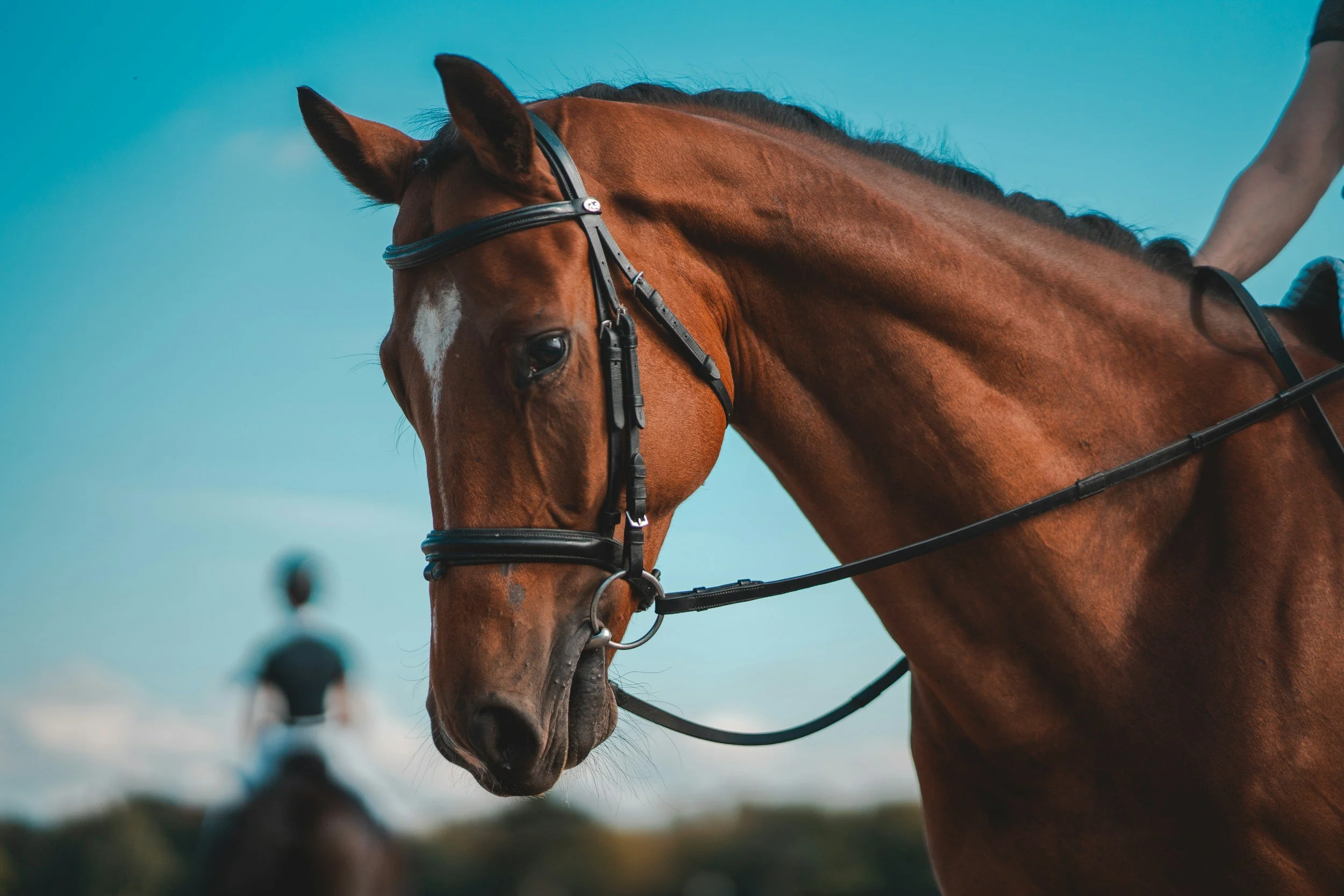
Horses learn through repetition. Each repeated interaction can become part of the horse’s understanding—whether we intended to teach it or not.
That is why foundational training deserves care.
A horse can learn to move forward from a light leg aid, but they can also learn to ignore the leg when pressure is applied continuously. A horse can learn to wait quietly for direction, or they can learn to anticipate when the same pattern is repeated without variation. A horse can learn that the reins offer clear information, or that rein pressure is something to brace against.
Once a response becomes familiar, changing it may require the horse to let go of an established answer before learning a new one.
The late equestrian Reiner Klimke compared incorrect training to buttoning a sweater incorrectly: to fix it, you must go back, undo the mistake, and begin again. That metaphor captures why I value developing clear responses from the beginning.
Perfection is not a realistic standard for either horse or trainer. Thoughtfulness is. Taking the time to establish mostly correct, understandable habits early can prevent confusion and make every stage that follows easier for the horse and rider.
Progress is not always linear
Green horses are not the same from one day to the next.
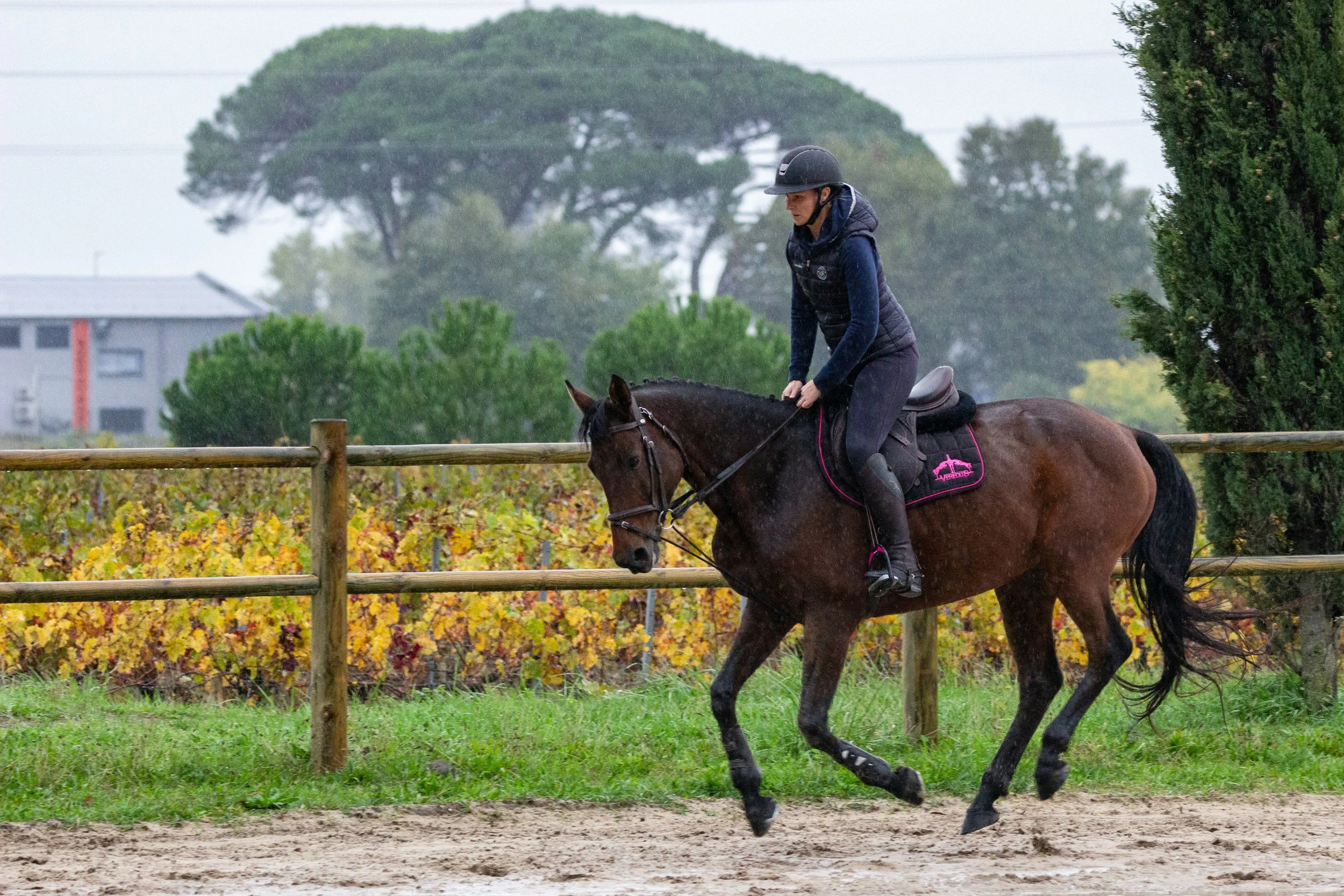
A skill that felt easy yesterday may feel difficult today. A horse may be tired, distracted, physically uncomfortable, mentally overwhelmed, or simply having an off day. Growth can also make a young horse feel temporarily uncoordinated, while changes in environment, routine, equipment, or expectations can affect horses of any age.
An inconsistent day does not necessarily mean the horse has forgotten the lesson or that the training has failed.
Good training requires knowing when to:
Repeat a familiar exercise
Break a question into smaller pieces
Go back to a previous training step
Give the horse more time to process
Change the plan for the day
Investigate whether discomfort or another physical factor may be involved
Recognize a genuine effort and end on a productive note
Progress is evaluated over time—not by demanding that every session be better than the last.
This flexibility is not a lack of standards. It is part of developing a horse thoughtfully enough that confidence, understanding, and physical ability can grow together.
Developing the horse for the rider
A professional trainer being able to ride the horse is not the final measure of success.
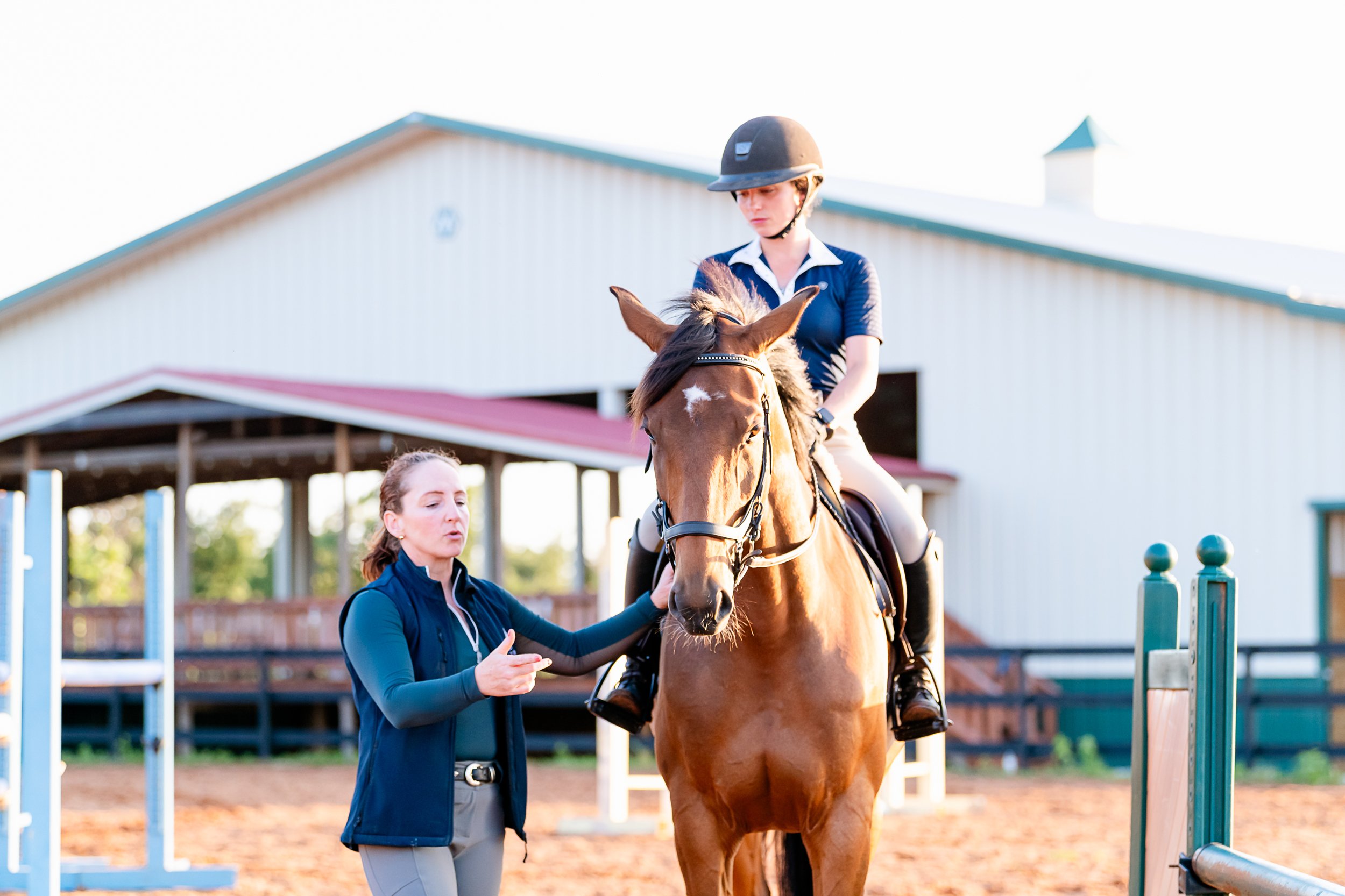
The goal is to develop a horse whose education can be understood and continued by their owner or regular rider. That means creating consistent responses, establishing appropriate expectations, and helping the rider learn how the horse has been taught.
Whenever possible, the transition between trainer and rider should be part of the horse’s development—not something left until the end.
Depending on the horse-and-rider partnership, this may include helping the owner:
Understand the cues the horse is learning
Recognize and reward the horse’s early efforts
Improve the timing of their own aids and releases
Maintain consistency between professional training rides
Identify when the horse is confused rather than disobedient
Set expectations that reflect the horse’s current stage of development
Continue building the horse’s confidence without rushing the process
The aim is not simply to produce a more educated horse. It is to create a clearer, more sustainable partnership.
Is this training right for your horse?
Young and green horse training may be appropriate for:
Young horses ready to continue their education after a good professional start
Lightly started horses needing consistent professional development
Older horses with limited training or significant gaps in their foundation
Broodmares transitioning into ridden careers
Retired racehorses preparing for second careers
Horses entering the hunter–jumper discipline from another background
Horses whose physical ability has progressed beyond their current understanding
Owners who want professional help building a foundation they can continue
For young horses, I generally prefer a solid 60–90 days with an experienced horse starter before continuing their development. I work with several trusted professionals who specialize in that important first stage.
Every horse’s history, temperament, physical development, and long-term purpose are different. Before recommending a training approach, I want to understand what the horse already knows, what they are being prepared to do, and what their owner hopes the partnership can become.
If your young or green horse needs a thoughtful foundation—or an older horse is beginning an entirely new chapter—I would be happy to learn more about them.
Tell me about your horse’s age, history, current level of training, and your goals for their future. From there, we can discuss whether Whole Heart Equestrian is the right fit, along with current availability and pricing.